Dog Aging Project — Studying How Dogs Age.
Dog Aging Project — Studying How Dogs Age.
By watching their pets, dog owners learn all sorts of things about them: what food they love, where they prefer to sleep, which toy they refuse to share, and which tree they absolutely have to stop at on every walk. But one of the most important questions is much harder to answer:Dohy do some dogs live longer and remain healthy well into old age, while others much earlier? — This is exactly what the scientists behind the Dog Aging Project are trying to find out..
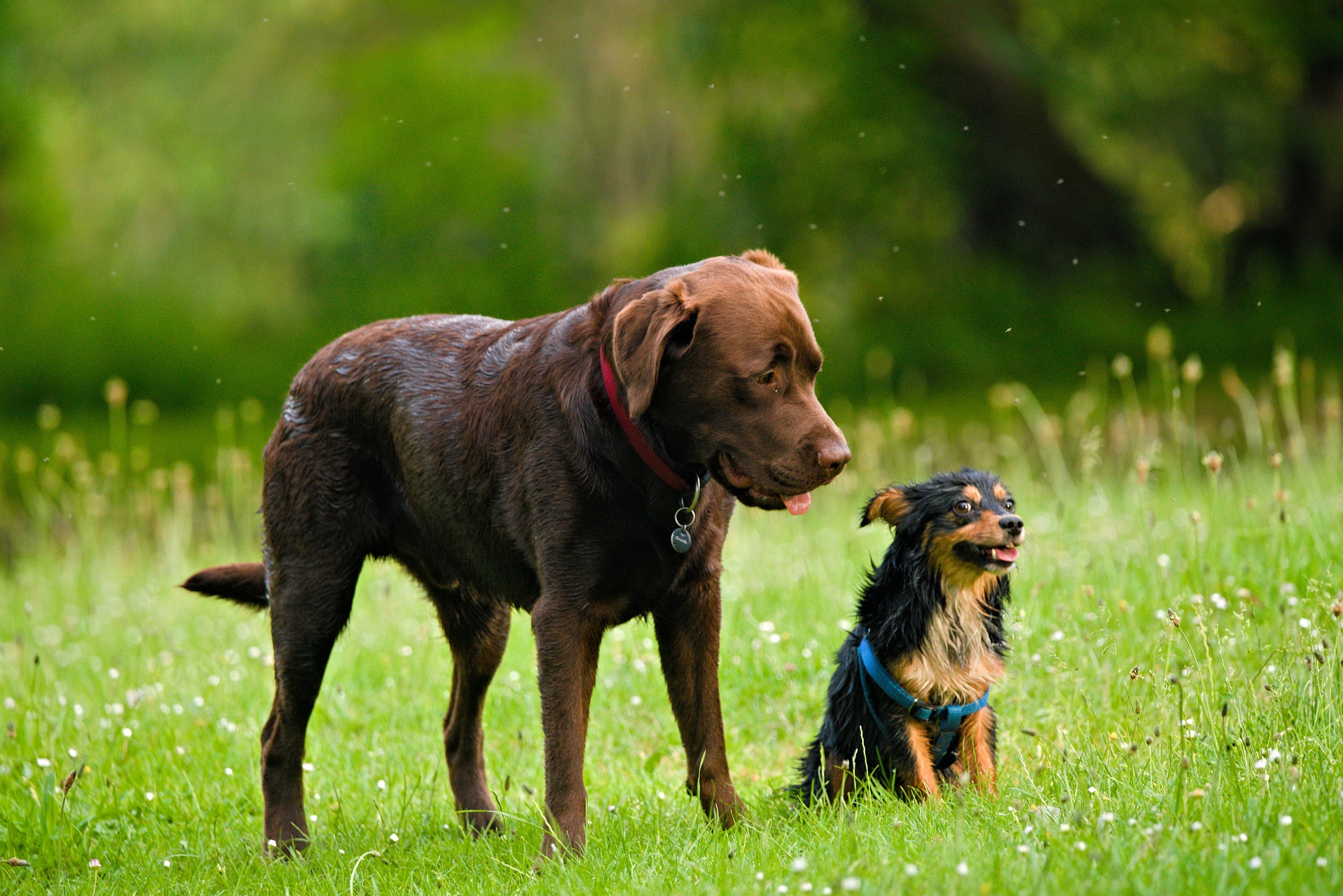
The story of the project began long before its first large database was created. In 2007, geneticist and aging researcher Daniel Promislow saw a Great Dane and a Chihuahua side by side on the cover of Science The article was about the genetics of body size in dogs, but it prompted Promislow to ask a different question: why do large dogs generally have shorter lives than small ones?
That question gradually grew into a much more ambitious idea. In 2014, Promislow, biologist Matt Kaeberlein, and veterinary researcher Kate Creevy founded the Dog Aging Project. In 2018, the project received funding from the U.S. National Institute on Aging, part of the National Institutes of Health (NIH), to conduct a large-scale, long-term study of aging in companion dogs.
Why Dogs?
Dogs vary enormously in size, genetics, and lifespan. They develop many of the same age-related diseases that affect humans. And, importantly, companion dogs share our environment:they breathe the same air, drink water from the same sources, are exposed to the same urban or rural surroundings, and, of course, live in the families we create around them.
The Dog Aging Project therefore has two closely connected goals: to understand how dogs can live longer, healthier lives, and to shed light on the mechanisms of human aging.
Tens of Thousands of Dogs — and Tens of Thousands of Different Lives
The Dog Aging Project is not a single experiment but a large network of studies. Dog owners regularly provide information about their pets' health, behavior, diet, physical activity, medical treatment, and living conditions. The project also includes special cohorts in which researchers analyze DNA, blood, urine, fecal samples, hair, and other biological specimens. The Precision Cohort, for example, was created to track molecular changes in dogs as they age over time.
There are clinical trials as well. One of the best known is TRIAD, which is investigating whether rapamycin can affect health and lifespan in older dogs. It is important not to get ahead of the evidence, however: the fact that such a trial is under way does not mean that rapamycin has already been proven to extend the lives of companion dogs.
A study of more than 11,000 dogs between the ages of 6 and 18 found an association between greater physical activity and better cognitive health. Another study revealed a complex relationship between a dog's size, age, and different groups of diseases: although large dogs generally have shorter lifespans, that does not mean every age-related disease is more common in larger dogs.
Another Dog Aging Project study asked a particularly intriguing question:Does the environment in which a dog lives affect its health?»
21,410 Dogs and the Environments They Live In
For this study, researchers used data from 21,410 companion dogs.Owners answered dozens of questions not only about their dogs' health, but also about their everyday lives and social environments.
After statistical analysis, the researchers identified five major groups of factors: neighborhood stability, household income, living with children, living with other animals, and the owner's age.Together, these five factors accounted for about one-third of the variation in the dogs' social environments captured by the questionnaires.
The Results
Dogs from higher-income households tended to have better health outcomes. Greater instability in the living environment was associated with poorer health and lower physical mobility.
But the strongest association was found for social support.Greater social support — including living with other dogs — was associated with better health even after the researchers accounted for the dogs' age and body weight. In the statistical model, the association between social support and health was about five times strongerthan the association with financial factors.
We tend to think of caring for a dog mainly in terms of good food, vaccinations, medical treatment, weight management, and regular veterinary checkups. All of these are undoubtedly important. But the Dog Aging Project is also examining another part of a dog's life that is much harder to measure: its environment, stability, and social connections.A dog does not exist separately from the home it lives in. Its life is made up of walks and exercise, familiar people and animals, changes within the family, daily routines, and hundreds of other things we rarely think of as possible components of health.
Can We Help Our Dogs Live Longer?
The Dog Aging Project does not yet offer a simple answer to that question. And perhaps that is precisely what makes it so fascinating.
Aging is the result of a complex interplay between genetics, disease, environment, and lifestyle. Some factors are beyond our control; others we can influence.
Perhaps the most valuable thing about this project is that thousands of dogs continue to grow older along with it. New data accumulate every year, allowing researchers to observe not only what young and old dogsare like today, but how the same individual dog changes over time.So we will be following the Dog Aging Project closely, waiting for the results of studies already under way and for new discoveries about how our dogs age — and, perhaps, how we do too.